Iterative mini-gesture routines for rapid variation
Iterative mini-gesture routines for rapid variation
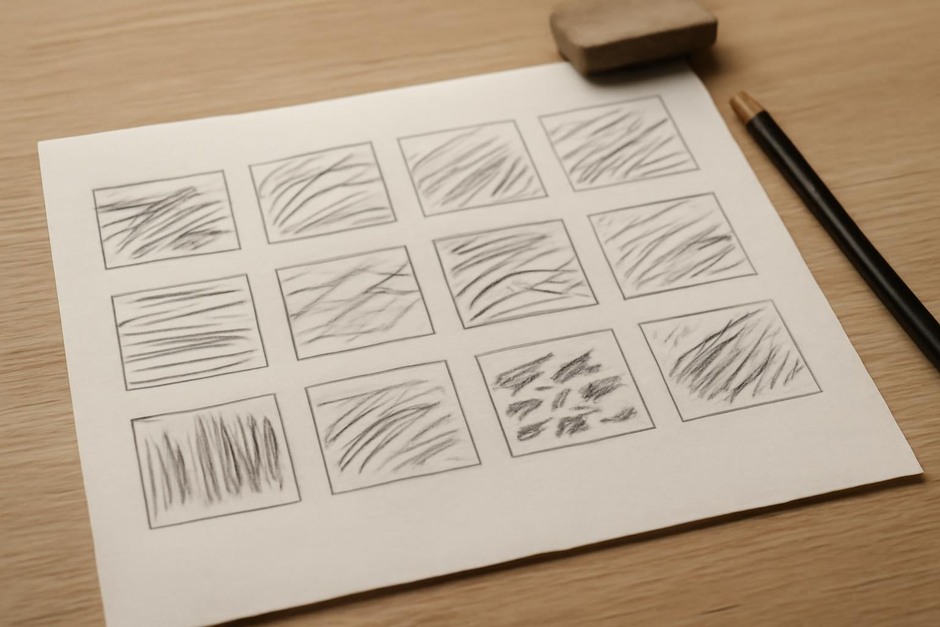
Iterative gesture routines are compact methods for producing rapid variations of a single idea. The routine enforces limits — time, palette, or scale — and asks you to change one variable across iterations. The result is a set of thumbnails that map possible directions for a composition. This note compares three iterative routines and supplies exercises to adopt them into short studio sessions.
Routine A — Single-variable iteration
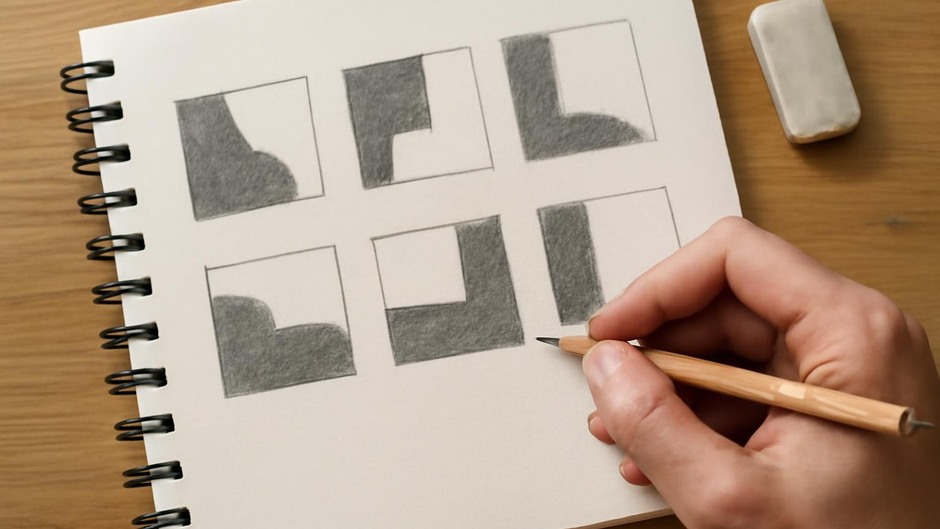
Single-variable iteration requires changing only one thing per thumbnail: scale, angle, density, or value. For example, draw six small thumbnails where the only change is the size of the primary element. This isolates the effect of that single decision, showing how scale alone alters rhythm and balance. This routine is excellent for diagnosing sensitivity: you quickly see whether a composition fails because of scale, placement, or another factor.
Routine B — Constraint-and-release
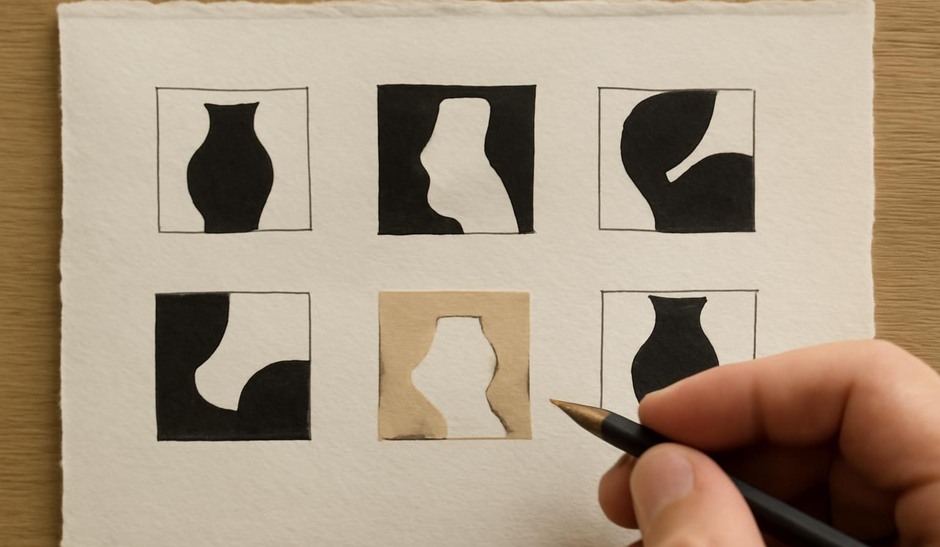
Constraint-and-release alternates thumbnails under a strict constraint with thumbnails that lift that constraint. Start with three thumbnails limited to one mark type or a single value, then make three more where those limits are released. The contrast clarifies what the constraint afforded — structure, clarity, or a fresh problem — and what is revealed when more freedom is permitted. It is a useful exercise for deciding whether a constraint should be kept in a more finished piece.
Routine C — Micro-variation chains
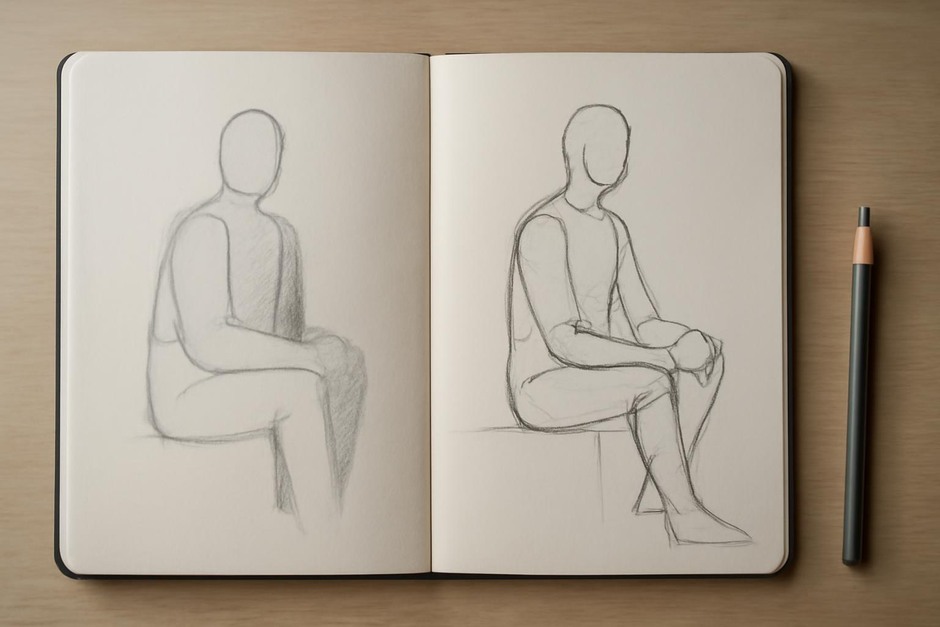
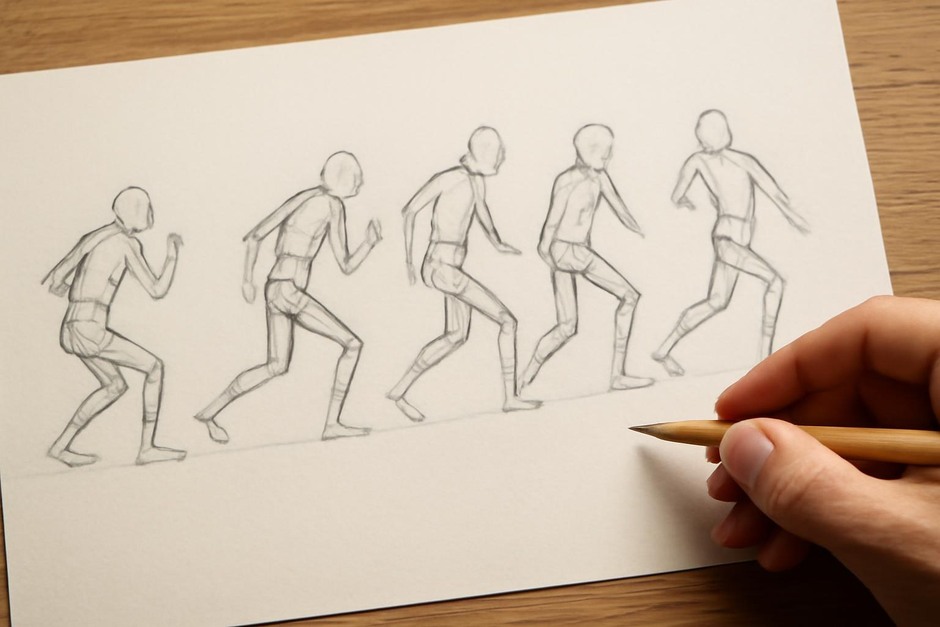
Micro-variation chains are sequences where each thumbnail changes very slightly from the previous one. For instance, shift the placement by a millimeter, rotate the primary shape by a small angle, or nudge a shadow. The resulting chain maps the local decision space and helps identify stable configurations versus fragile ones that collapse under small changes. This routine suits refinement and helps you choose robust compositions that remain effective under minor adjustments.
These routines train different instincts. Single-variable iteration clarifies causal effects. Constraint-and-release reveals the productive limits. Micro-variation chains teach resilience. Combining them in practice offers both breadth and depth: you see broad options and the robustness of particular choices.
Exercises to practice
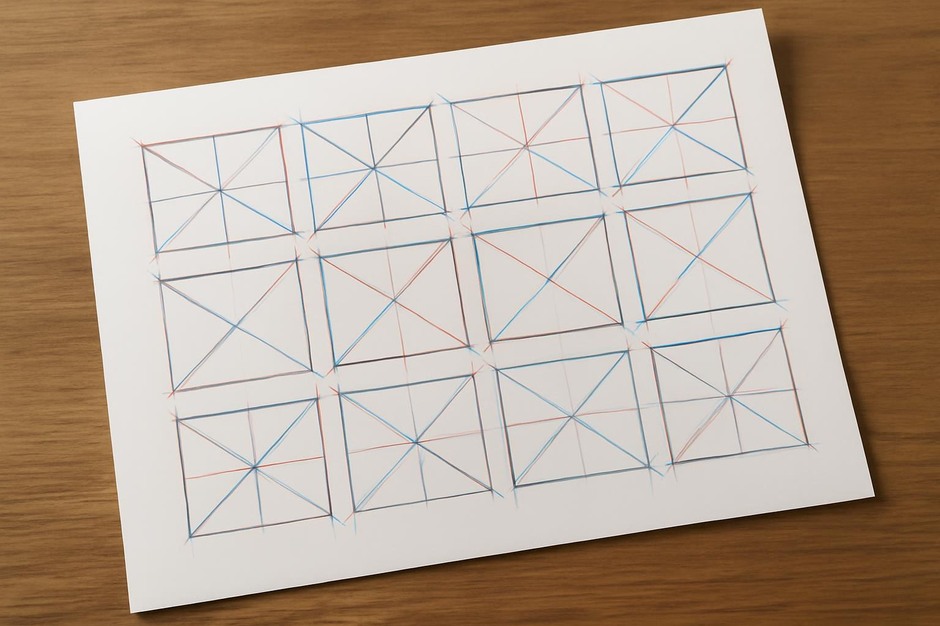
- Six-by-Six: On a page, make a 2×3 grid and apply single-variable iteration to the top row, constraint-and-release to the middle, and micro-variation to the bottom. Use the same subject for all rows and keep each thumbnail under 2 minutes.
- Decision Map: After completing a micro-variation chain, pick the three thumbnails you prefer and annotate what changed between them. This habit builds vocabulary around subtle shifts.
- Constraint Swap: Choose a constraint that feels limiting (single ink, one value, one mark type) and apply it for ten thumbnails. Then swap to a different constraint and repeat. Compare which constraint yields the most useful solutions for your subject matter.
Iterative mini-gesture routines are practice devices as much as they are compositional tools. They produce options you can select from rather than single answers. Over time, they refine your sensitivity to small changes and help you develop a practical sense of which adjustments produce meaningful differences. They also provide a generous set of sketches from which larger works can be developed with intention.