Shape-first versus edge-first approaches
Shape-first versus edge-first approaches
Two practical rhythms often surface in quick thumbnail work: begin with broad shapes and refine toward detail, or start by sketching crisp edges and let the interior follow. Each workflow foregrounds different perceptual skills. This note compares their effects, strengths, and typical pitfalls, and offers exercises that help you discover which aspects of composition each method clarifies.
Shape-first: the silhouette strategy
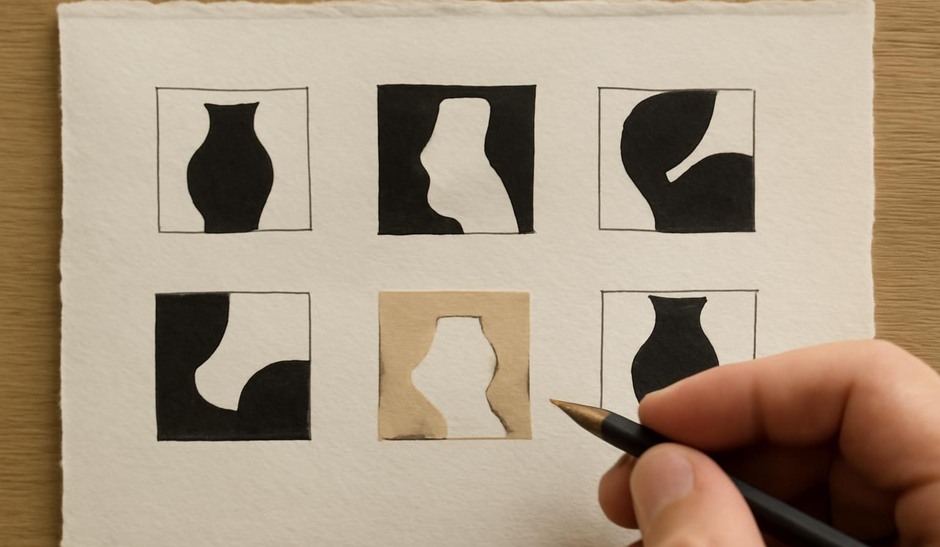
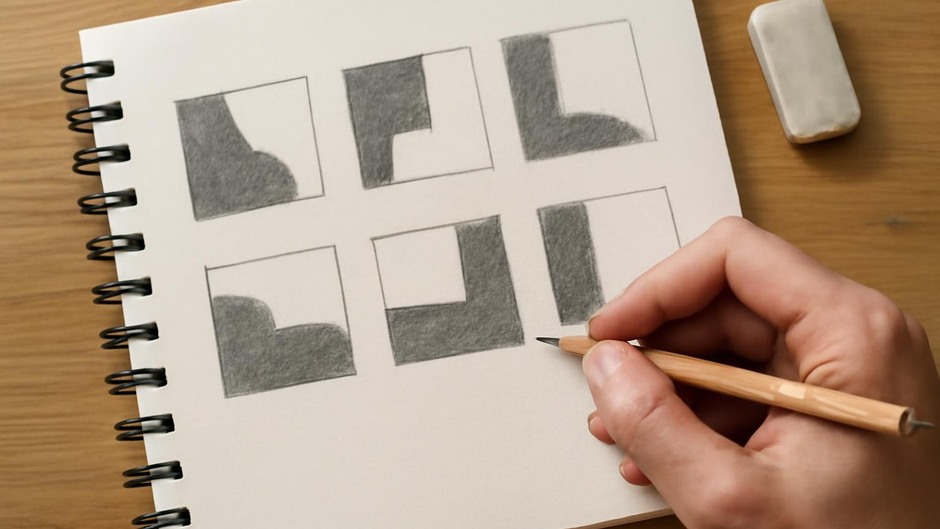
Shape-first means blocking major masses early. You rapidly simplify a subject into large values or silhouettes and then adjust proportions and spatial relationships. This approach excels at revealing the overall compositional rhythm and the relationship between positive and negative space. It is forgiving: small errors in an edge are often absorbed when the next large shape is placed, so alignment and balance tend to be resolved at a higher level before detail intervenes.
Edge-first: contour and specificity
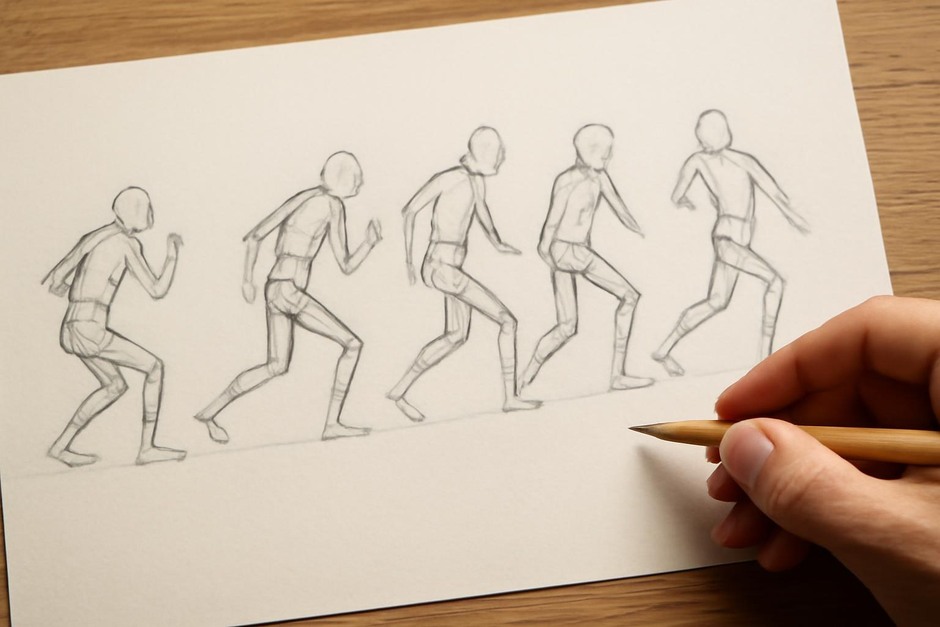
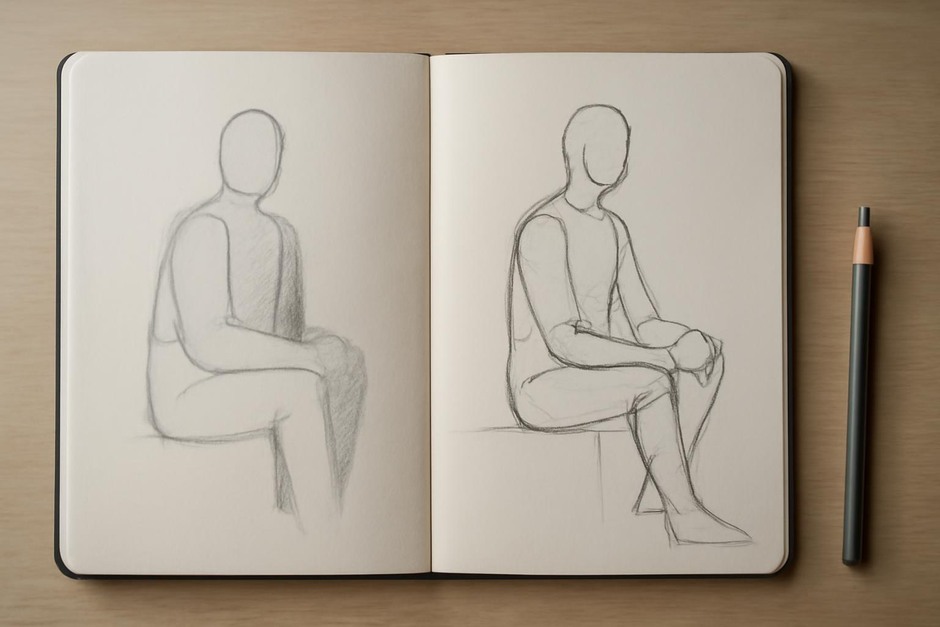
Edge-first starts with contours, lines, and the relationships of form boundaries. The advantage is an early sense of specificity: a confident edge can anchor the rest of the drawing and make proportions feel controlled. Edge-first can be beneficial when capturing character, gesture, or when the silhouette is less informative than the contour relationships. It can, however, lead to focusing on local correctness at the expense of overall balance if the broader shapes are never stepped back to be considered.
Which is better? Neither. They serve different priorities. Shape-first privileges the whole and its intervals; edge-first privileges delineation and articulation. Both approaches can be combined within the same practice: a rapid silhouette to set the stage, followed by targeted edge work to articulate the focal point.
Exercises to test both
- Two-Minute Pairs: Make pairs of thumbnails. In the first of each pair, block in shapes for 60–90 seconds and then add a single edge detail for 30 seconds. In the second, spend 60–90 seconds on an edge-based contour and 30 seconds filling masses. Compare legibility and balance across the pair.
- Silhouette-First Drill: Create a page of ten silhouettes. Do not add any interior lines. At the end, pick three that read strongly and add edge detail to those only. Note how much the silhouette contributed to the decision of where to detail.
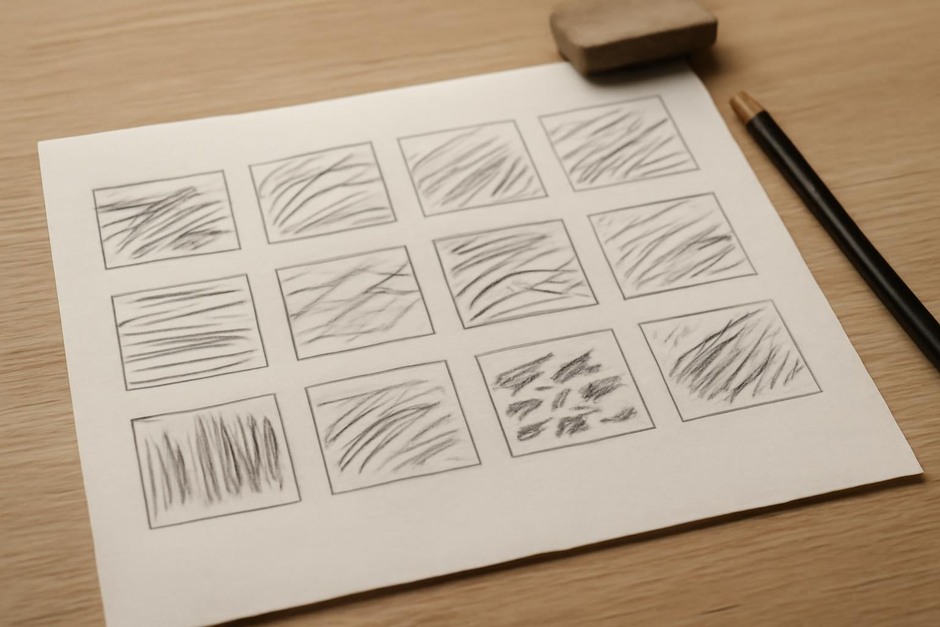
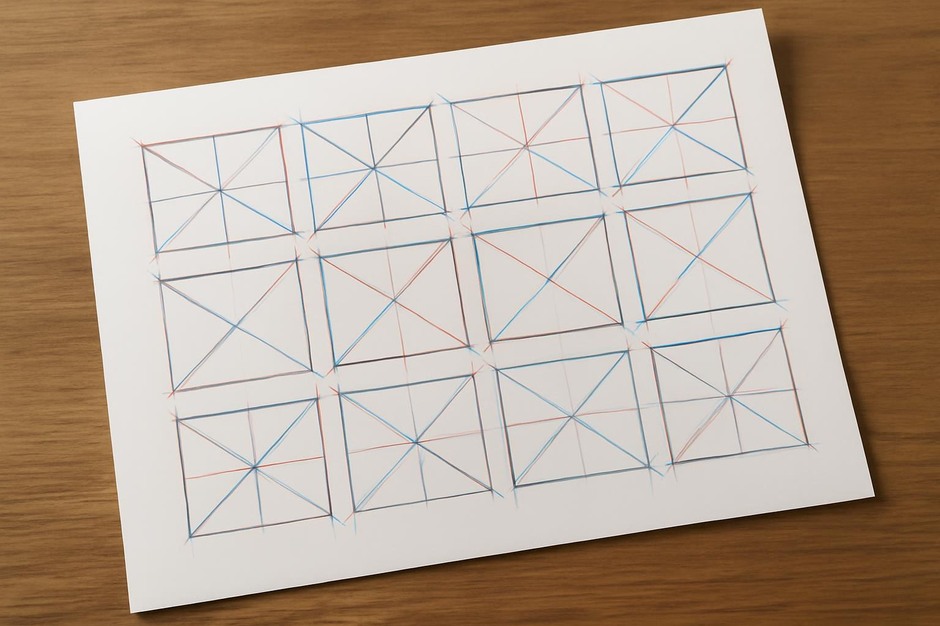
- Contour Constraint: On a grid of small squares, draw only contours for five thumbnails, then redraw the same thumbnails immediately using only masses. Observe which method conveys the subject more clearly and which better establishes overall rhythm.
Common refinements: when shape-first work feels flat, introduce one or two confident edge strokes as accents. When edge-first work becomes fussy, step back and block the largest shapes with a broad tool or value. Over time, each method trains different perceptual muscles. Shape-first improves global judgment; edge-first improves local control. Practicing them side by side gives a clearer sense of when to use one, the other, or a hybrid approach in studio work.